Updated for the 2026 publication year. Rural land can create tax consequences, but ownership alone does not guarantee a deduction, exemption, lower assessment, or tax savings. Results depend on the taxpayer, use, records, income, holding period, state and local law, and current federal rules. This overview is educational, not tax advice; confirm decisions with current IRS instructions, local taxing authorities, and a qualified tax professional.
Property taxes and the federal SALT deduction
Landowners generally receive local property-tax bills whether or not the property produces income. At the federal level, an individual who itemizes may be able to include qualifying real-property taxes within the state and local tax deduction, subject to current rules. Personal assessments, service charges, delinquency interest, and other items may be treated differently.
For tax year 2025, the IRS Schedule A instructions and Publication 530 report an overall SALT deduction limit of $40,000, or $20,000 for married taxpayers filing separately. The limit is reduced when modified adjusted gross income exceeds $500,000, or $250,000 for married filing separately, but not below $10,000 or $5,000 respectively. For 2026, the IRS correction to Form 1040-ES states limits of $40,400 and $20,200, with phase-down thresholds of $505,000 and $252,500 and the same $10,000 and $5,000 floors. Only qualifying state and local income, sales, and real-property taxes count, itemizing is required, and taxpayer-specific treatment varies.
Agricultural or open-space valuation is not automatic
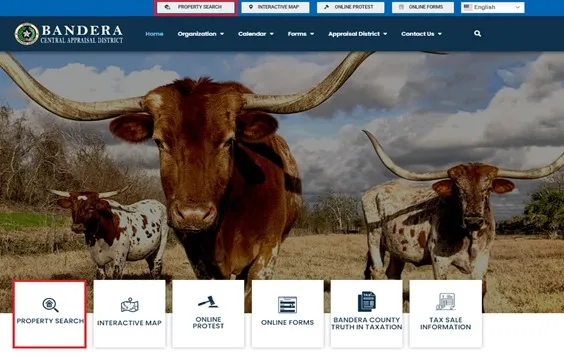
States and localities may provide use-value assessment, special appraisal, classification, credits, or exemptions for qualifying agricultural, timber, conservation, or open-space use. These programs use different names and requirements. Owning acreage, keeping a few animals, or planning future farm activity does not automatically qualify.
Ask the county assessor or appraisal district about qualifying use, history, acreage or intensity standards, application deadlines, annual filings, leases, evidence, recertification, and consequences of changing use. A sale, subdivision, development, or nonqualifying use can trigger rollback, recapture, deferred tax, interest, or loss of status under state or local law.
Farm and business deductions require a real activity
Expenses connected with a genuine trade, business, or farming activity may be treated differently from personal or investment expenses. The IRS Farmer’s Tax Guide, Publication 225 addresses farm income and expenses, depreciation, soil and water conservation costs, and other farming topics. Eligibility depends on the facts and current rules; labeling property a “farm” does not make every cost deductible.
Keep invoices, mileage and use records, contracts, leases, receipts, tax bills, loan statements, and records that separate personal, investment, and business use. Startup costs, capital improvements, land costs, repairs, interest, and operating expenses can receive different treatment. Improvements often affect basis or depreciation rather than creating an immediate deduction.
Interest is not universally deductible
Interest treatment depends on why the debt was incurred and how the land is used. Personal interest is generally treated differently from qualified residence interest, investment interest, or business interest. Vacant land does not become a qualified home merely because the owner may build later. Seller-financed interest also requires accurate records, and information-reporting rules may apply.
Do not compare financing based on a presumed tax deduction. Ask a qualified adviser to classify the debt and trace use of proceeds under current law. Compare the loan’s pre-tax total cost first.
Basis, improvements, and sale
Basis is central to measuring gain or loss. Purchase price and certain acquisition costs may enter initial basis; qualifying capital improvements may adjust it. Routine carrying or personal costs are not all added automatically. Preserve closing statements, deeds, surveys, legal invoices, improvement contracts, and proof of payment for as long as needed.
When land is sold, the federal result can depend on adjusted basis, amount realized, holding period, depreciation, use, and transaction costs. The IRS Publication 544 covers sales and other dispositions of assets. State income tax and local transfer or recording rules may also apply.
Like-kind exchanges have narrow requirements
Section 1031 may defer recognition of gain on qualifying exchanges of real property held for business or investment. It is not a tax-free sale, and real property held primarily for sale or personal use may not qualify. Related-party, identification, timing, receipt-of-funds, and basis rules are technical. The IRS like-kind exchange guidance is a starting point, but taxpayers should obtain advice before selling or taking control of proceeds. Waiting until after closing can be too late to structure an exchange.
Conservation easements require careful substantiation
A qualified conservation contribution may support a charitable deduction only when statutory requirements are met. Value, qualified organization, conservation purpose, perpetuity, appraisal, acknowledgment, deed language, reporting, and recordkeeping can all matter. The IRS Publication 526 explains charitable-contribution rules and appraisal requirements. An easement also permanently affects property rights and value; tax motivation should not replace legal, land-use, and valuation review.
A year-by-year rural-land tax checklist
- Confirm the property-tax value, classification, exemptions, deadlines, and appeal process with the local authority.
- Track taxes, interest, income, expenses, improvements, depreciation, and personal use separately.
- Retain closing, title, loan, lease, farm, conservation, and sale records.
- Review whether a special-use classification must be renewed and what change-of-use consequences apply.
- Use the instructions and dollar limits for the tax year being filed.
- Seek advice before a sale, exchange, conservation easement, subdivision, or material change in use.
The most valuable “tax benefit” is often accurate classification and recordkeeping, not a promised deduction. A parcel should make sense for its intended use and budget even if an expected tax treatment is unavailable.
For state and local use-value programs, see our agricultural special-appraisal guide.
See our agricultural land for sale.
Official resources
- IRS Publication 530: Tax Information for Homeowners
- IRS Publication 225: Farmer’s Tax Guide
- IRS Publication 544: Sales and Other Dispositions of Assets
- IRS: like-kind exchanges—real estate tax tips
- IRS Publication 526: Charitable Contributions
- IRS: 2026 SALT deduction correction
- IRS: 2025 Instructions for Schedule A (Form 1040)