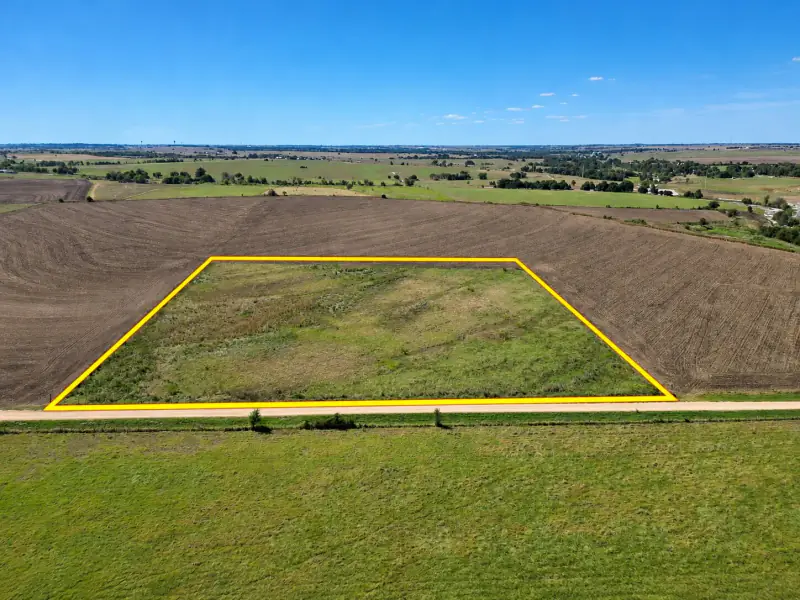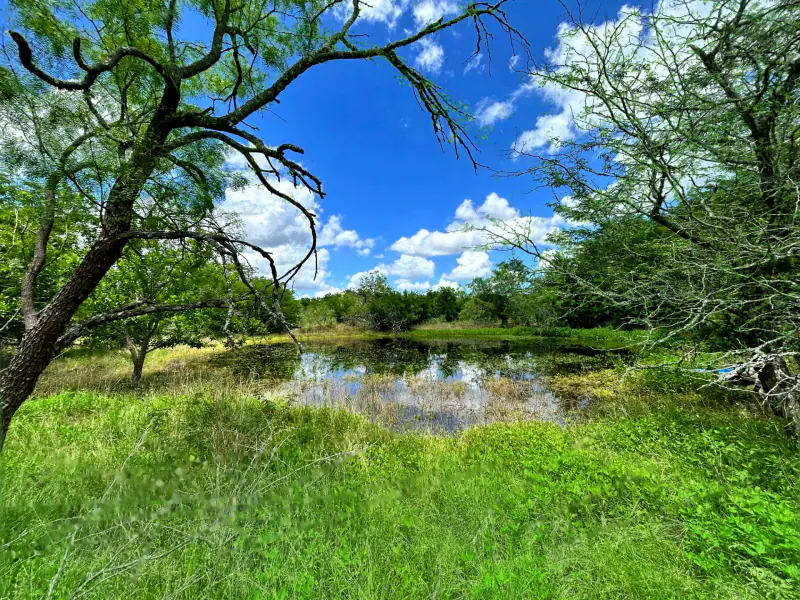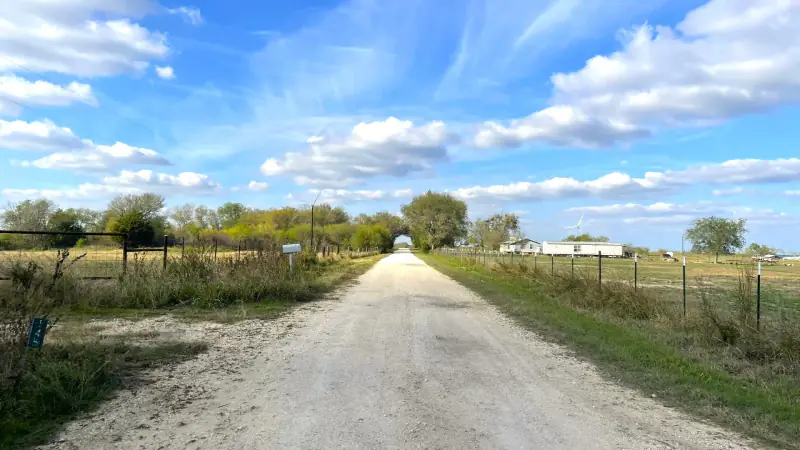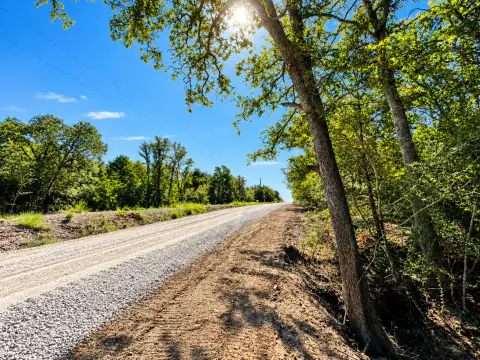
We’ve been selling land since 2016, to more than 800 buyers, and we developed Timber Ridge Ranchettes, an unrestricted ranchette community in Polk County, Texas. The unrestricted question comes up constantly, usually followed by a hopeful pause and “so I can do anything?”
The honest answer is “almost anything the county and the state allow.” It fits on a yard sign about as well as a lease. Here’s which rules unrestricted removes, and which ones stay.
| Rule | Applies on unrestricted land? | Where to check |
|---|---|---|
| Deed restrictions | No | Title commitment, Schedule B |
| Property owners’ association and dues | No | Title commitment; county clerk records |
| Zoning | Inside city limits, plus a few areas named in state law | Local Government Code ch. 231 |
| Plat approval to divide land | Yes | Local Government Code ch. 232 |
| Septic permit | Yes | County, under TCEQ rules |
| Development, floodplain and 911 address | Yes | County permit office |
| Driveway onto a state highway | Yes | TxDOT Form 1058 |
| Recorded easements | Yes | Title commitment; survey |
| Manufactured home title | Yes | TDHCA |
Notice how short the “No” list is. Unrestricted removes the private rules. The public ones stay put, like the fence post a previous owner swore he’d pull “this weekend” in 2009.
What does unrestricted land mean in Texas?
Unrestricted land means no recorded deed restrictions and no property owners’ association control how you use the property. Texas law calls those private rules restrictive covenants: any “covenant, condition, or restriction” in a recorded dedicatory instrument (Property Code §202.001). An unrestricted tract has none recorded against it.
The Texas Real Estate Research Center explains that once restrictions are recorded, every future owner is bound by them, even one who never read a word. They’re the paperwork version of a houseguest who came for a weekend in 1978.
Typical restrictions set a minimum home size, ban mobile homes, limit RV stays, cap livestock and charge yearly dues. Some ban chickens, which seems hard on the chickens. Unrestricted land skips all of it. If you’re weighing how much land you need, start with What Is a Ranchette?
Does unrestricted land mean there’s no zoning?
Outside city limits, usually yes. The Research Center notes that Texas counties have limited authority that doesn’t include general zoning, and only some counties can zone, mostly around specific lakes. Inside a city, zoning applies no matter what the deed says.
Local Government Code chapter 231 lists those exceptions, such as Padre Island, military zones and land near certain named lakes. It’s a short list, and no, the neighbor’s stock tank isn’t on it. That’s why “unrestricted” carries so much weight in Texas listings. When the county mostly can’t zone, the deed is where the rules live.
What permits do you still need on unrestricted land?
You still need septic, development, floodplain and 911 address permits, because they come from the state and county, not the deed. TCEQ says a permit and approved plan are required to build, alter, repair or operate a septic system. Your county or its authorized agent usually issues it.
Polk County’s permits page spells out the rest. You need a development permit before building any structure, and to get electric service. Under 10 acres you always buy a septic permit, each extra home needs its own, and both permits are pulled at the same time. One trip, two permits. At a county office, that’s practically a parade.
Each home also needs its own 911 address, which the electric company wants before it sends power. Fair. They’d like to know where the house is before they light it. Building in a mapped floodplain takes an Elevation Certificate first, so check the FEMA flood map by address. In Polk County, wells must be registered with the Lower Trinity Groundwater Conservation District before drilling, and a new driveway onto a state highway, Farm-to-Market roads included, needs TxDOT Form 1058.
Dividing the land is its own rule. Local Government Code §232.001 requires a plat when land outside city limits is divided into two or more parts to lay out lots, even by a metes-and-bounds deed. Unrestricted is about what you do on the land, not how many pieces you cut it into. For the septic details, read how to get a septic system on raw land in Texas. The soil gets a vote, and it doesn’t care about your floor plan.
Can you put a mobile home or RV on unrestricted land in Texas?
Usually yes, if nothing recorded says otherwise and you get the county’s septic, development and address permits. A manufactured home also has state paperwork. TDHCA says it stays personal property unless you elect real property on a Statement of Ownership and record it with the county clerk.
TDHCA also says only a licensed installer may install or relevel the foundation. Not a job for three friends, a borrowed jack and a cooler. At Timber Ridge Ranchettes, manufactured homes, tiny homes, barndominiums and full-time RV living are all allowed with county permits. The RV is fine, but the sewage still needs a permitted place to go. More in Can You Live in an RV on Your Own Land in Texas?
Renting spaces to others is different. Texas lets counties set standards for manufactured home rental communities (§232.007), and Polk County has its own regulations for RV parks too. Your RV is a home. Five friends’ RVs paying rent is a business with a permit fee.
How do you check that land is really unrestricted?
Read the title commitment. The Research Center explains that recorded restrictive covenants should be listed in Schedule B of the commitment for title insurance, with recorded easements after them. No restrictions in Schedule B means unrestricted in the way that counts.
- Read Schedule B yourself. It’s dull. Dull is the good result.
- Search the county clerk’s records. Polk County offers a free online index search.
- Read the plat notes. That’s where setbacks like to hide.
- Check the survey for easements, power lines and pipelines.
- Call the county permit office with your plan before you buy, not after the slab.
Our guide to finding out who owns a property shows how county record searches work.
What’s the downside of unrestricted land?
Your neighbors are unrestricted too. Nothing private stops the next tract from holding a shop, a row of equipment or a herd of goats, as long as the county allows it. And with no association, nobody maintains anything shared.
Goats are the likeliest outcome, honestly. They find unrestricted land the way water finds a low spot. So look next door, and favor deep lots and tree lines. Everything inside your boundary is yours to mow and fix, fire ants included. They didn’t sign anything either.
What we’ve seen developing Timber Ridge Ranchettes
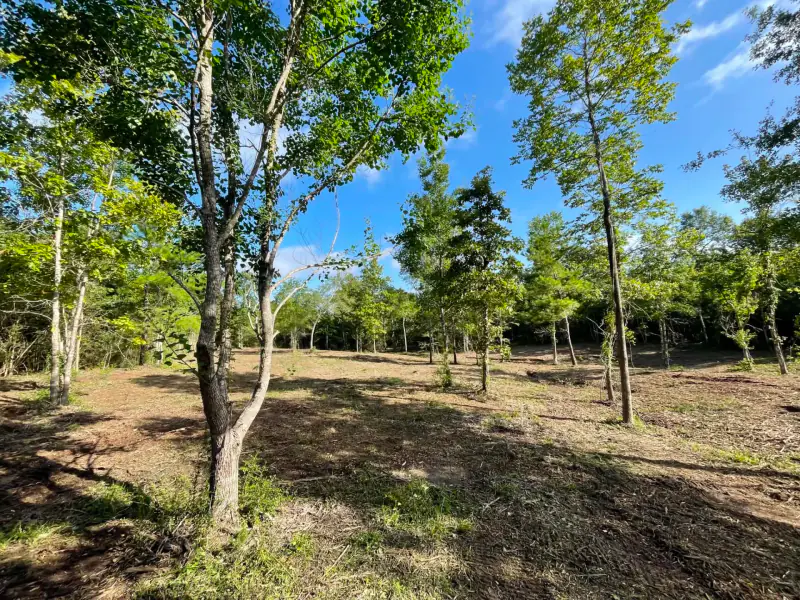
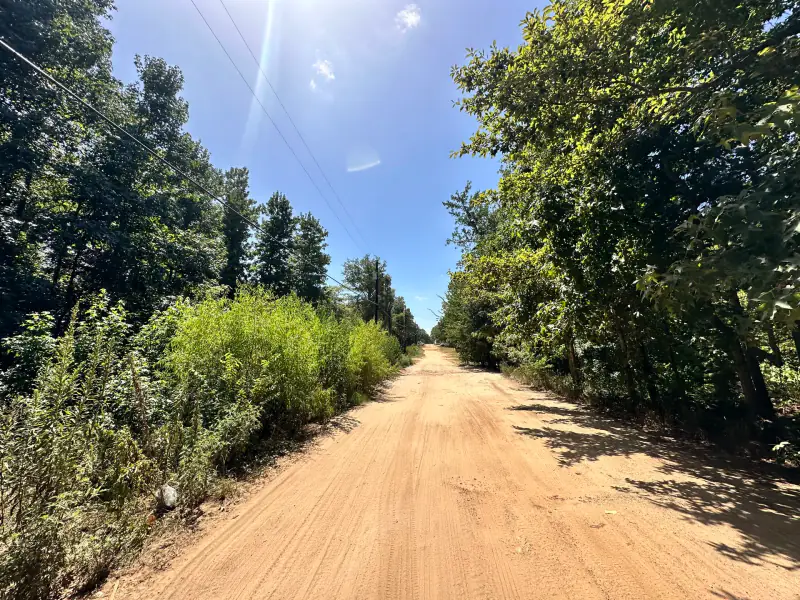
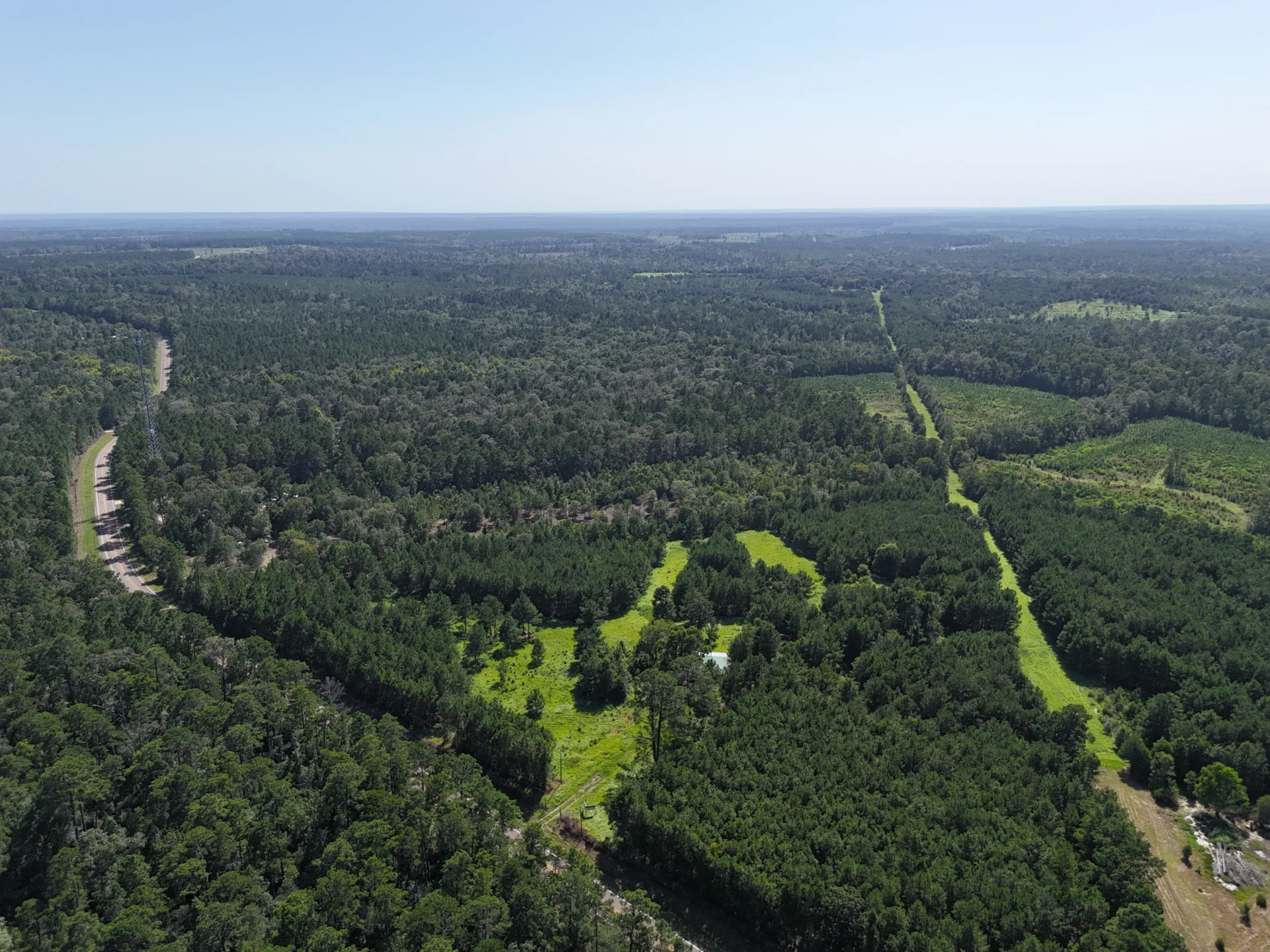
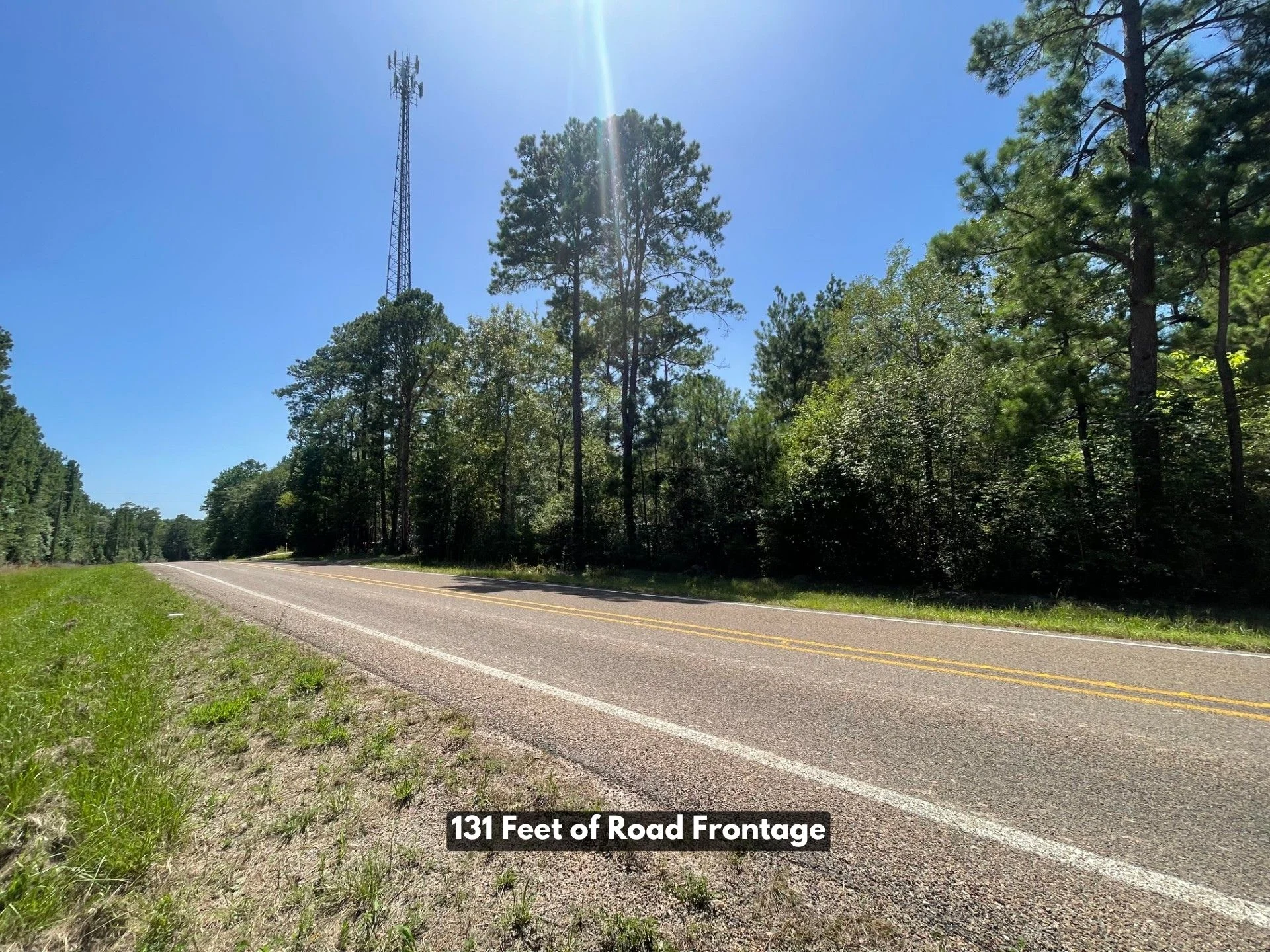
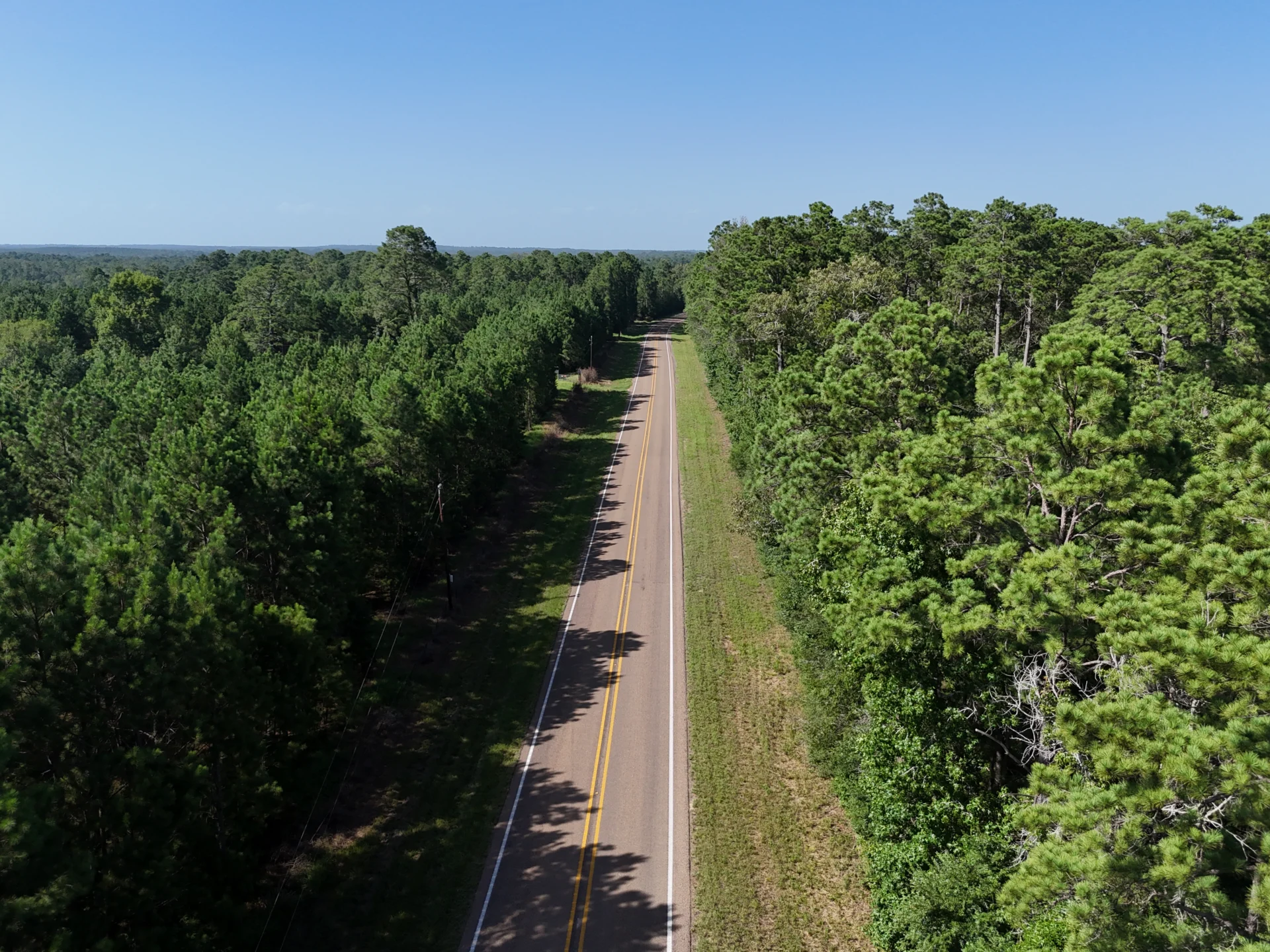
Timber Ridge Ranchettes sits on paved FM 942, about 14 minutes from Corrigan and 30 minutes from Lake Livingston. The homesites run about 4 to 7 acres, with no deed restrictions and no property owners’ association. Every public rule above still applies, so we built around them.
- We left a wall of pines along the highway and mulched the inside with a hydro axe. The privacy is planted, not written into a covenant.
- Moscow Public Water Supply meters are installed, Sam Houston Electric serves the frontage, and fiber runs along the highway.
- A septic feasibility study for the whole development was approved by the county for spray or drip systems. Each homesite still gets its own permit.
- Lots are surveyed and platted, with T-posts every 50 feet on shared lines, because “somewhere near that pine” isn’t a boundary.
- Some lots can support a second water meter, so a second home works with its own septic permit and 911 address.
- Horses, cattle, sheep and goats are welcome. We warned you about the goats.
Polk County’s subdivision rules also restrict new multi-unit mobile home parks, which makes it harder for the tract next door to become forty rental pads.
Want room to build your way? Browse our unrestricted land for sale, or see all land for sale in Polk County, and check each lot page for acreage, utilities and owner-financing terms.
Elegment Land Team
Selling land since 2016, with more than 800 buyers served and a BBB A+ rating.
Official resources
- Texas Property Code ch. 202: Construction and Enforcement of Restrictive Covenants
- Texas Property Code ch. 209: Texas Residential Property Owners Protection Act
- Texas Local Government Code ch. 231: County Zoning Authority
- Texas Local Government Code ch. 232: County Regulation of Subdivisions
- Texas Real Estate Research Center: What You Need to Know About Land-Use Restrictions in Texas
- TCEQ: Getting a Permit for an On-Site Sewage Facility
- TDHCA: Statement of Ownership FAQ
- TxDOT: Access Driveways and Form 1058
- FEMA Flood Map Service Center
- Polk County: Permits (development, septic, 911 addressing)
- Polk County: County Regulations
- Polk County Clerk: Records Search